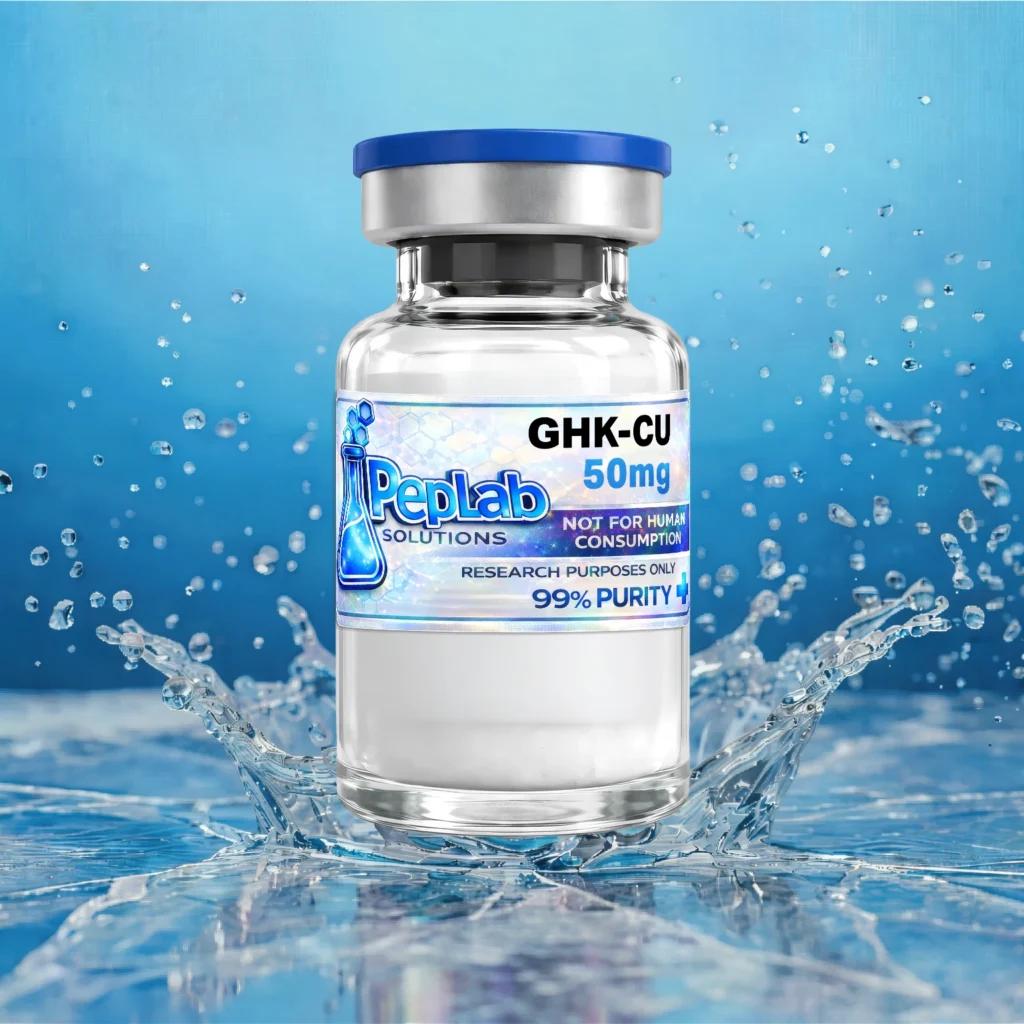
GHK-CU
Price range: $40.00 through $70.00
Ghk-cu peptide
GHK is a naturally occurring tripeptide made up of glycyl-L-histidyl-L-lysine. Within the body, it has a high affinity for copper (II) ions, and when it binds with copper, it forms the biologically active complex known as GHK-Cu.
What is GHK-Cu Peptide?
GHK-Cu is a naturally occurring compound formed by the tripeptide GHK (glycyl-histidyl-lysine) bound with copper. It was first identified in 1973 by Loren Pickart, who observed its ability to encourage older human liver tissue to produce proteins similar to those found in younger tissue, leading to its early classification as a liver growth-supporting factor. Further research later revealed that GHK plays a broader role, influencing various cell types and supporting tissue repair and regeneration throughout the body.
GHK is naturally found in human fluids such as saliva, plasma, and urine. However, its levels decline significantly with age—dropping by more than 50% after the age of 60. This reduction is associated with decreased regenerative capacity, which may contribute to slower healing and other age-related changes.
Ghk-cu peptide benefits – Ghk cu benefits
A number of studies have explored the cosmetic potential of GHK-Cu, particularly for improving visible signs of aging skin.
Research findings suggest that GHK-Cu may:
Help reduce the appearance of fine lines and wrinkles while improving skin density and thickness.
Enhance overall skin clarity and support a firmer, more youthful-looking appearance.
Promote the look of thicker, healthier hair.
Who are GHK-Cu peptides for?
Researchers and medical professionals suggest that GHK-Cu peptides may offer benefits across a range of applications, though outcomes can vary depending on how they are used. Different delivery methods may be more suitable depending on the intended purpose.
Topical GHK-Cu is primarily used for cosmetic applications, especially in skincare and haircare. It is commonly chosen by individuals looking for non-prescription options to address:
- Signs of aging such as wrinkles, fine lines, and reduced skin elasticity.
- Stretch marks.
- Hyperpigmentation issues like melasma and dark spots.
- Hair thinning and support for hair growth.
- Slow-healing wounds not linked to diabetes or pressure sores.
- Inflammatory skin conditions such as eczema and rosacea.
- Scarring from acne, injuries, or surgical procedures.
- Acne, including more severe or cystic forms.
Injectable GHK-Cu may also be used for aesthetic purposes, but due to its broader potential effects, it is often explored for:
- Managing pain and inflammation.
- Supporting recovery of muscles, tissues, and ligaments.
| Units | 50mg, 100mg |
|---|
Be the first to review “GHK-CU”
Related products
PEPTIDES
PEPTIDES
PEPTIDES
PEPTIDES
PEPTIDES
PEPTIDES
PEPTIDES
PEPTIDES
Reviews
There are no reviews yet.